Skip to content
DataNexx

Data category

Food & Beverage Testing

Microbiology and chemistry QC linked to production batches, release decisions and failed lots.

Food testing data is the record of how a batch was made, how it was tested and whether it was released. AI developers license these results to train and test models that predict food safety and quality. DataNexx helps food labs and producers find out which records can be licensed, and arranges the licence. There is no fee to the data owner.

Why it matters for AI

Recorded, judged, resolved.

Food QC records tie each batch to how it was made, how it was tested and whether it was released. Years of results — including the holds, rejections and fixes — show how real production behaves, which is hard to reproduce from public data.

Typical data

  • Microbiological testing
  • Chemical & nutritional analysis
  • Contaminant & allergen testing
  • Shelf-life & stability studies
  • Batch release decisions
  • Failed batches & holds
  • Corrective actions

Representative workflow

Illustrative

  1. 01Ingredient batch
  2. 02Processing conditions
  3. 03Micro & chemical tests
  4. 04Out-of-spec result
  5. 05QC disposition
  6. 06Corrective action
  7. 07Released or rejected batch

Who typically holds it

  • Accredited food testing laboratories
  • Food and beverage manufacturers' QC labs
  • Ingredient and flavor producers
  • Contract manufacturers and co-packers

Potential AI applications

  • Food safety and quality prediction
  • Anomaly and contamination detection
  • Shelf-life modelling
  • Food science AI

What food testing data do labs and producers hold, and where does it live?

Accredited food labs keep results in a LIMS. Producers' QC labs often use the same, or a quality management system (QMS) linked to the ERP. Batch and processing records sit in production systems, and holds and rejections in the QMS.

The most useful records link a test result to the batch, the ingredients and the decision that followed. A failed micro test is worth more when you can see what was done about it. LIMS audit trails also matter: they show who entered or changed each result, which is how buyers check data integrity.

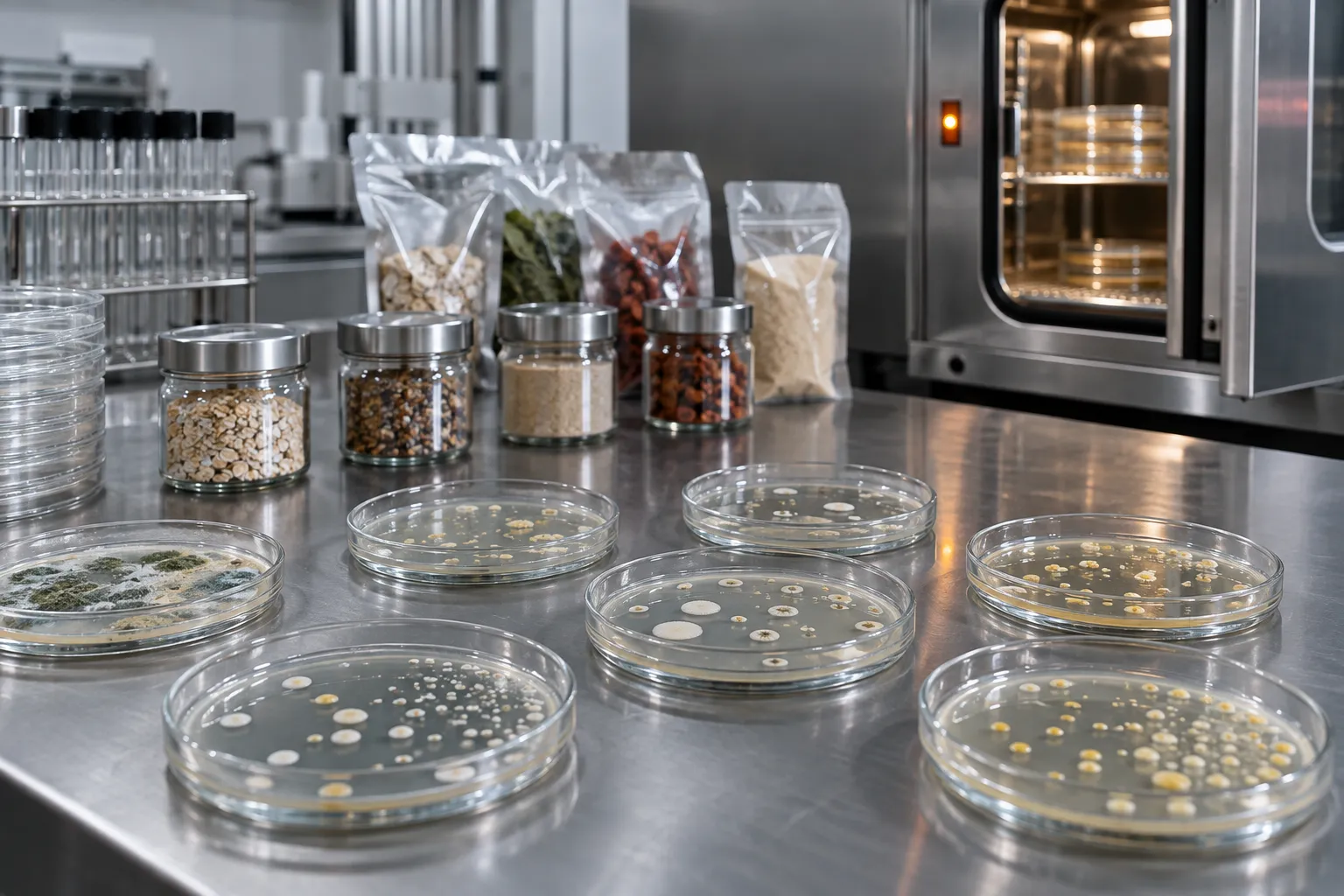
  • Microbiology results, such as pathogen and spoilage counts
  • Chemical, nutritional and contaminant analysis
  • Allergen testing and label checks
  • Shelf-life and stability studies
  • Batch release decisions, holds, rejections and corrective actions
What can AI teams build with food testing data?

Food safety models need real outcomes. A lab result tells them what the batch really contained, and the release decision tells them what a qualified person did with it.

Out-of-spec results and rejected lots are the most valuable part. They are rare, and they show the early signs of a problem.

  • Models that predict contamination or out-of-spec batches
  • Shelf-life prediction from recipe, process and storage data
  • QC assistants that check results against specifications
  • Evaluation sets for food science reasoning

Can a food lab license results from client testing?

Only after review. Contract labs test samples for clients, and client contracts decide what may be reused. Brand names, product codes and supplier details are removed before anything is licensed.

Producers who test their own products usually have more freedom. Recipes and supplier terms can still be confidential, so some fields may be generalized or left out. This is not legal advice; your counsel decides what is allowed.

How do you describe your food testing data for a first assessment?

You do not need to send any data. Start with a short description: the test types, the product groups, the years covered and the systems that hold the results.

Say whether results link to batch records and release decisions. Note which data is your own and which comes from client work. The assessment walks you through it, and we reply within 24 hours.

Example record (illustrative)

One batch test record as a food QC lab might export it. Field names and contents are illustrative.
FieldWhat it holds
Batch IDAn internal code, replaced with a new random ID before licensing
Product groupA general category, such as dairy dessert or bottled juice
Process conditionsKey settings, such as pasteurisation time and temperature
Test panelThe tests run, for example total plate count and Listeria
MethodThe test method and the lab's SOP version
ResultEach value with its unit and specification limit
DispositionReleased, held or rejected, with the reviewer's note
Corrective actionWhat was changed after a failure, and the retest result

Frequently asked questions

What is food testing data?

Food testing data is the set of lab results a producer or food lab records for a batch: microbiology, chemistry, allergens and shelf life. For AI, it is most useful when it stays linked to the batch and the release decision.

Can we license data that includes failed batches?

Yes, and those records are often the most useful. Failed batches show models what real problems look like. Names and product details are removed, so the data does not point back to a brand.

What does data integrity mean for food testing records?

It means each result is complete, consistent and accurate, and you can show who recorded it and when. FDA guidance for drug manufacturing sums this up as ALCOA: attributable, legible, contemporaneous, original and accurate. The same checks help food labs. A LIMS with audit trails makes this easy to show; results kept only in spreadsheets need more review, but they can still be useful.

Do we have to share recipes?

No. Recipes are usually confidential and can be left out or described in general terms. Models can still learn a great deal from process conditions, test results and outcomes.

Who pays for the assessment?

There is no fee to the data owner. Compensation comes from the licence, when an AI company licenses the data.

Trust & compliance

Data licensing without losing control.

Your data stays yours until you decide otherwise. We assess before anything is shared, and we treat rights and privacy as conditions of a transaction — not afterthoughts.

No raw data for an initial evaluation

Nothing moves without authorization

Ownership is not the same as licensing rights

Specialist review where it is needed

Scoped records, never bulk exports

How we handle rights, privacy and confidentiality

Own valuable data?

Check your data's licensing potential.

A confidential, no-raw-data assessment of your company's records — from lab results and production logs to cases, claims and transactions.

Building AI?

You specify it. We source it.

Tell us the proprietary data your model needs — domain, structure, formats and rights. We approach the organizations that produce it.