Skip to content
DataNexx

Data category

Healthcare & Clinical Data

De-identified clinical records, imaging reports and lab results linked to care pathways and outcomes.

Healthcare datasets for AI are de-identified records of real care: what was observed, what was ordered, what was decided and what happened next. AI developers license them to build and test clinical models. DataNexx helps hospitals, clinics and diagnostic providers find out what can be licensed, under privacy review, and arranges the licence. There is no fee to the data owner.

Why it matters for AI

Recorded, judged, resolved.

Clinical records connect what was observed, what was ordered, what was decided and what happened next. They are licensed only after formal de-identification, and only with the legal basis, patient consent or ethics approval the provider's privacy officer requires. That longitudinal chain is something public medical text cannot supply.

Typical data

  • De-identified encounter records
  • Coded diagnoses & outcomes
  • Lab orders & results
  • Radiology & pathology reports
  • Medication & procedure categories
  • Admissions & length of stay
  • Longitudinal follow-up
  • Vital signs & device time-series
  • Adverse-event summaries
  • Outcome registries

Representative workflow

Illustrative

  1. 01Presentation & history
  2. 02Orders & tests
  3. 03Results & imaging reports
  4. 04Clinician assessment
  5. 05Treatment or procedure
  6. 06Follow-up measurements
  7. 07Recorded outcome

Who typically holds it

  • Hospitals and multi-site clinic groups
  • Diagnostic imaging and pathology providers
  • Specialty clinics and outpatient centers
  • Clinical research units

Potential AI applications

  • Clinical decision-support research
  • Report and note structuring models
  • Outcome and risk prediction
  • Medical evaluation sets with verified outcomes

What clinical data do providers hold, and where does it live?

Most clinical data sits in the electronic health record (EHR). Imaging lives in PACS, with radiology reports in the RIS. Lab results come from the lab system, and device readings often sit in separate monitoring tools.

The value is in the links between them. A clinical dataset is more useful when an imaging report connects to the lab results, the diagnosis and the recorded outcome for the same de-identified patient.

  • Encounter records with coded diagnoses and procedures
  • Lab orders and results over time
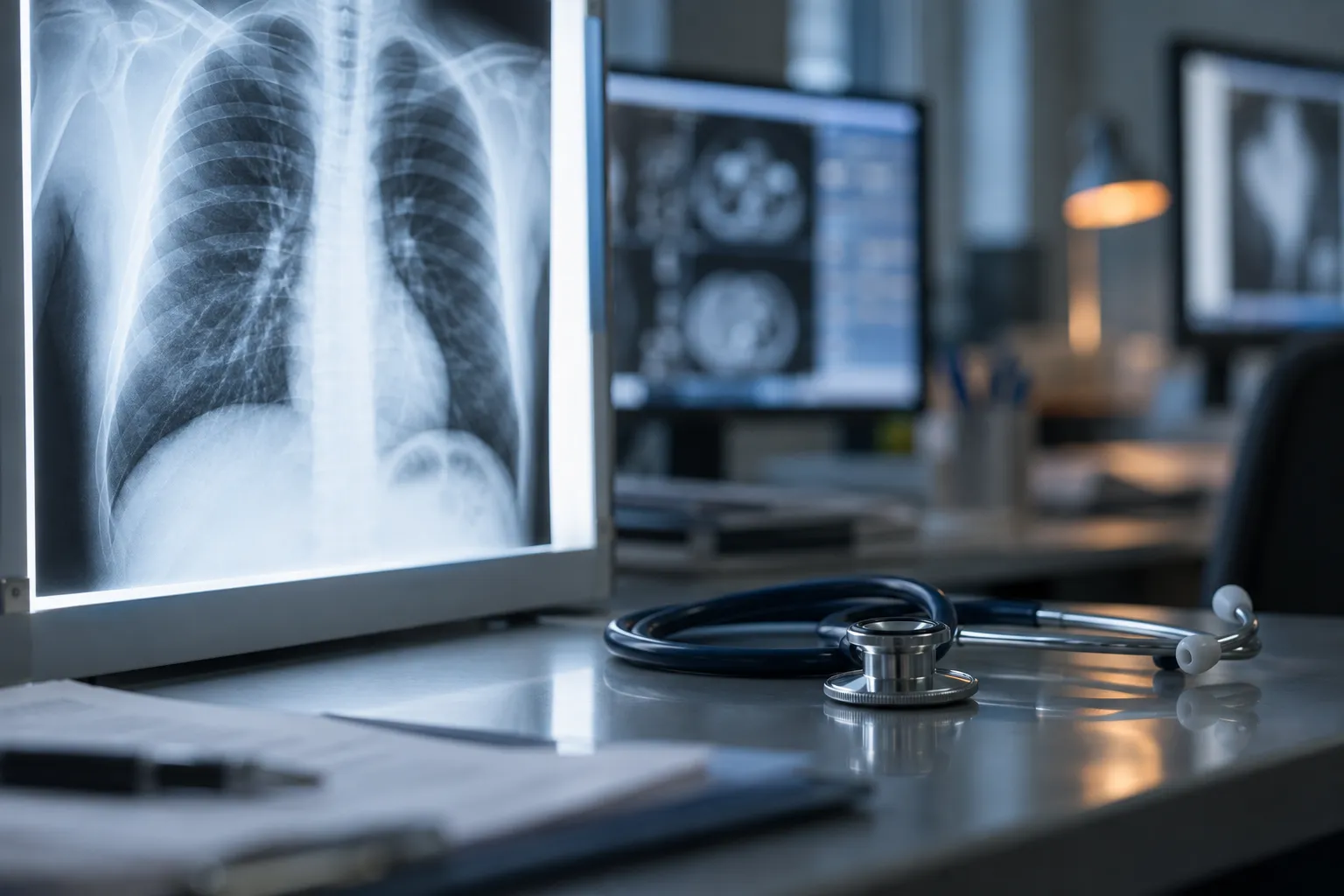
  • Radiology and pathology reports, and medical imaging
  • Medication and treatment categories
  • Follow-up visits and recorded outcomes

What do AI teams build with de-identified data?

Medical AI teams use de-identified data to train and test models on real cases. Public medical text explains diseases. It rarely shows the full path of one patient from first visit to outcome.

  • Report and note structuring models
  • Clinical decision-support research
  • Risk and outcome prediction
  • Medical imaging datasets for detection and triage research
  • Evaluation sets with verified outcomes

How is patient privacy protected?

Nothing is licensed with names, contact details or other direct identifiers. In the United States, the HIPAA Privacy Rule recognizes two ways to de-identify health information: Safe Harbor, which removes listed identifiers, and Expert Determination, where a qualified expert confirms the risk of re-identification is very small.

Other countries have their own rules, and some uses need patient consent or ethics approval. The provider's privacy officer and counsel decide the legal basis. We work inside that decision, not around it.

How do you describe healthcare data for a first assessment?

You do not send any patient data to start. Describe the record types, the years covered, the rough number of patients or encounters, and the systems involved.

Say whether data has been de-identified before and by which method. Note any consent or research approvals already in place. We reply within 24 hours.

Example record (illustrative)

One de-identified imaging encounter, linked to later results. Field names and contents are illustrative.
FieldWhat it holds
Study IDA random code with no link back to the patient's record number
Age bandA range such as 60 to 69, instead of a date of birth
IndicationThe coded reason the scan was ordered
ModalityThe type of imaging, for example CT or ultrasound
Report findingsThe radiologist's report, with names and dates removed
Related lab resultsTests ordered around the same time, as values and units
DiagnosisThe coded diagnosis confirmed at follow-up
OutcomeWhat happened next, shown as relative time rather than calendar dates

Frequently asked questions

What are healthcare datasets?

Healthcare datasets are collections of health records prepared for analysis, such as encounters, lab results, imaging reports and outcomes. For AI, they are de-identified and licensed for a stated use.

What is de-identified data?

De-identified data is health information with identifiers removed, so it can no longer reasonably be linked to a person. Under HIPAA this is done by Safe Harbor or Expert Determination. Other countries set their own standards.

Is DataNexx a healthcare dataset marketplace?

No. We do not sell datasets from a catalogue. We connect providers that hold clinical data with AI teams that need it, and arrange a licence for each project. AI teams can describe what they need on our Request a Dataset page.

Can AI teams get radiology data or medical imaging datasets through DataNexx?

AI teams can request imaging data, and we look for providers that hold it and are willing to license it. Images and reports are de-identified first, and the licence sets what the data may be used for.

Who decides whether patient data can be licensed?

The provider does, with its privacy officer and counsel. They decide the legal basis, the de-identification method and any consent or ethics approval. This page is not legal advice.

Trust & compliance

Data licensing without losing control.

Your data stays yours until you decide otherwise. We assess before anything is shared, and we treat rights and privacy as conditions of a transaction — not afterthoughts.

No raw data for an initial evaluation

Nothing moves without authorization

Ownership is not the same as licensing rights

Specialist review where it is needed

Scoped records, never bulk exports

How we handle rights, privacy and confidentiality

Own valuable data?

Check your data's licensing potential.

A confidential, no-raw-data assessment of your company's records — from lab results and production logs to cases, claims and transactions.

Building AI?

You specify it. We source it.

Tell us the proprietary data your model needs — domain, structure, formats and rights. We approach the organizations that produce it.