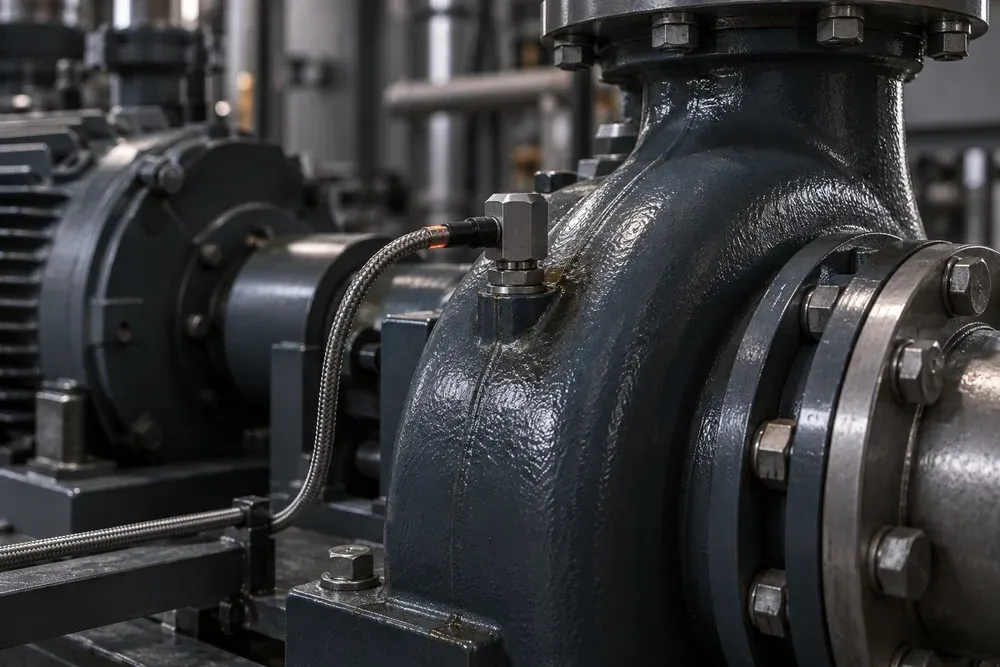
If your company runs, inspects or services equipment, you may already have industrial data you can license for AI training or evaluation. Think of the pressure history your service team checks after a compressor trips, the clips a packaging line saves when a carton jams, or the 3D scans a machine shop keeps to explain why a part failed inspection. Each records a different aspect of how the physical world behaves.
When owners ask how to sell industrial data, the first conversation is usually about a license: which records could someone use, for what purpose, and who can grant that permission? Start with one collection your team knows well. You can describe it in a few sentences before anyone needs to see a file.
What kinds of industrial data could your company license?
| If your company… | Look for records you already keep | What someone could study |
|---|---|---|
| Runs a factory or distribution center | Conveyor speeds, motor currents, camera clips of complete packing or sorting cycles | What happens between a speed change, a jam and a restart |
| Operates pumps, compressors or refrigeration systems | Pressure, vibration, temperature, flow and load readings over time | How the same equipment behaves under different loads |
| Machines or inspects parts | 3D surface scans, depth images, measurements and inspection results | Where a surface differs on parts that passed and failed inspection |
| Services equipment across customer sites | Diagnostic readings, alarm histories, dated repairs and follow-up tests | How a machine behaved before and after a documented intervention |
Machine sensor readings and time-series data
A sensor name is a good start. Its location, units and recording interval make the numbers interpretable. “Discharge pressure in bar, stored once a second while the compressor runs” explains more than “pressure data.” Check what the system actually saved. A controller may read vibration continuously while the archive retains a daily average and short bursts around alarms.
Channels can also run at different speeds. In one published hydraulic test-rig dataset, the researchers recorded pressure 100 times per second, flow ten times per second and temperature once per second. A supplier who knows those intervals can explain which changes are visible in the archive. Hydraulic condition-monitoring dataset
Video of equipment and processes
A camera above a sorting belt might record a carton approaching a diverter, the mechanism moving, and the carton reaching its destination. That sequence can support research into how an action changes a physical scene. A clip that starts after a jam answers a different question: what did the blockage look like once it had formed?
Describe the viewpoint, what triggers recording, how much footage survives and which parts of a cycle are visible. If the archive contains only rejected items, say so. If you can match a clip to line speed or an inspection decision, mention how. Treat installing cameras or filming new shifts as a separate collection project.
3D scans and inspection records
A machine shop might retain the CAD model used to make a part and a scan of the finished piece. The first describes the intended shape. The second measures what came off the machine. Repeated scans can show how surfaces vary across a production run, particularly when the inspection team kept the tolerance check or pass/fail decision for each part.
An industrial inspection benchmark illustrates this use of measured geometry: researchers collected high-resolution surface scans with an industrial 3D sensor to study how to locate anomalies. When describing your own archive, specify whether it contains point clouds, depth maps, meshes or inspection reports, and whether each measurement can be linked to the part inspected. 3D industrial inspection benchmark
How much data do you have? Count machines, time and events
A year’s history from one pump can capture seasonal changes. A month from ten comparable pumps lets someone compare units operating under different loads. Give both the time span and the number of physical machines. For video, distinguish hours retained from months the camera was installed. For scans, distinguish unique parts from repeat views of the same part.
Maintenance records add context when the equipment and timing line up. Suppose three compressors share a service log. A Tuesday work order says a valve was replaced, and a pressure trace shows a drop on Monday. Can the team identify which compressor received the valve? Does the timestamp mean the technician arrived, the repair finished or the office closed the ticket? An honest “we can match by machine and day” is more useful than claiming minute-by-minute alignment.
How to prepare an industrial dataset for a licensing conversation
- Name one collection. Identify the machine or process, format and measurements or actions it captures.
- Describe its coverage. Estimate machines, dates and usable hours, cycles or scans. Mention known gaps and whether normal operation is included.
- List records that can be matched. Note any shared equipment ID, timestamp or inspection reference connecting readings, footage, scans, alarms or repairs.
- Identify who can authorize use. A service provider might own its diagnostic notes while a customer controls the underlying footage. Check who can approve each collection for the proposed use, including any limits on sharing customer designs or recordings of people.
A first enquiry can be this simple: “We operate packaging lines and retain motor-current readings and short clips when a line stops. We can estimate the months and lines covered. Maintenance jobs identify the line and date, and our operations team can check which records we control.”
If your company owns industrial records or is authorized to represent the owner, send a high-level description of what you have and how it was recorded. Keep the files, footage, customer names and site details internal at this stage. Describe your industrial data to DataNexx
Frequently asked questions
What kinds of industrial data can I license?
Collections to assess include sensor histories, existing process video, measured 3D scans and equipment events. Licensing depends on the proposed use and who can authorize it.
How do I describe the size of a collection?
Count physical machines and usable time. For video, report retained hours. For 3D scans, distinguish unique parts from repeat views.
Can an archive cover a single machine?
Yes. Explain the operating conditions and periods it covers so a reviewer can assess the fit.
What makes maintenance records useful alongside sensor data?
An equipment reference and a meaningful timestamp can connect a service event to what a particular machine recorded before and after the work.
Do I need to send sample files?
Start with a high-level description of the records, their coverage and the permissions your team can verify.
Sources
Official and primary sources, checked on the date this guide was last updated.
Prepared by DataNexx with AI-assisted research and writing. Sources are linked throughout. This is general information, not legal advice.